
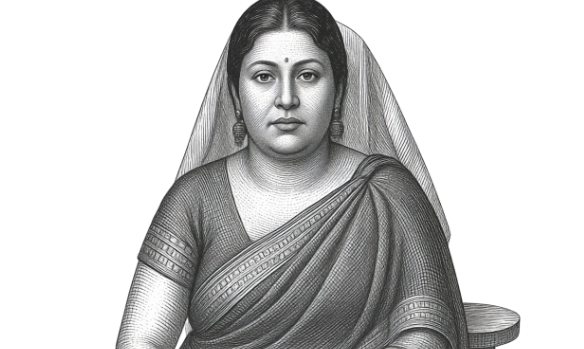

Some civil servants make headlines. Others quietly reshape systems in ways that ripple through everyday life. Priyanka Das belongs to the latter category—a thoughtful administrator whose work speaks more through outcomes than attention.
An IAS officer of the 2009 Madhya Pradesh cadre, she has built a career that moves seamlessly between policy, fieldwork, and institutional leadership. Whether working as a District Magistrate, a Mission Director, or now as a Secretary, her journey reflects a rare balance: intellectual grounding combined with practical governance.
Her story is not about a single breakthrough moment. It is about consistency, adaptability, and the kind of leadership that evolves with every responsibility.
In this article, PeopleLog provides insight into Priyanka Das’s age, financial growth, academic background, husband, and belief system.
Profile Summary
| Field | Details |
|---|---|
| Full Name | Priyanka Das |
| Date of Birth | April 19, 1984 |
| Age | Around 40 years |
| Nationality | Indian |
| Profession | IAS Officer |
| Cadre | Madhya Pradesh (2009 Batch) |
| Education | B.A. (Political Science), Postgraduate in Political Science |
| Current Role | Secretary, MSME Department |
| Marital Status | Married |
| Spouse | Civil servant (name not publicly disclosed) |
| Domicile | West Bengal |
Early Life and Background
Priyanka Das was born in West Bengal, a state known for its deep intellectual traditions and political awareness. Growing up in such an environment often leaves a lasting impression—and in her case, it likely shaped her interest in governance and public affairs.
Her early life appears to have been rooted in education and curiosity. Unlike stories marked by dramatic hardship, hers seems to be one of steady preparation—a reminder that not all impactful journeys begin with adversity; some begin with awareness and purpose.
Academic Journey
Education played a central role in Priyanka Das’s path.
She pursued a Bachelor’s degree in Political Science from Calcutta University, followed by a postgraduate degree from Jawaharlal Nehru University (JNU), Delhi—one of India’s most respected institutions for social sciences.
Studying political science is not just about theory; it is about understanding power, policy, and society. JNU, in particular, is known for encouraging debate and critical thinking.
This academic background likely gave her a strong conceptual framework—something that would later help her navigate the complexities of administration.
Entering the Civil Services
Priyanka Das joined the Indian Administrative Service in 2009 through direct recruitment—a highly competitive process that demands both intellectual rigor and mental resilience.
Choosing civil services is often about more than career ambition. It reflects a willingness to engage with the system from within, to work at the intersection of policy and people.
For her, this marked the beginning of a journey that would span districts, departments, and diverse challenges.
Early Career and Field Experience
The early years of an IAS officer are often spent in field postings, where decisions have immediate consequences.
In these roles, Priyanka Das would have dealt with:
- Rural development programs
- Public service delivery
- Crisis management
- Administrative coordination
This phase is crucial. It is where officers learn that governance is not abstract—it is deeply human, often messy, and always evolving.
Key Administrative Roles
Over the years, Priyanka Das has held a wide range of positions, each adding a new layer to her administrative experience:
- Collector & District Magistrate
- Municipal Commissioner
- Managing Director
- Mission Director
- Deputy Director and Joint Secretary-level roles
Each role comes with its own challenges. Being a District Magistrate, for example, requires balancing law and order with development. Working as a Mission Director involves managing large-scale programs with measurable outcomes.
Major Achievements and Recognition
Priyanka Das’s work has not gone unnoticed. She has been associated with several recognized initiatives and awards, including:
- Beti Bachao Beti Padhao recognition
- National Water Awards (2018)
- Kayakalp Awards
- Saakshar Bharat National Literacy Award (2017)
These recognitions suggest a focus on social impact—particularly in areas like education, gender equality, sanitation, and water management.
Awards in administration are rarely about individual brilliance alone; they reflect the ability to mobilize teams and implement policies effectively.
Leadership as District Magistrate
Serving as a District Magistrate is often considered one of the most demanding roles in the IAS.
In such positions, Priyanka Das would have been responsible for:
- Maintaining law and order
- Overseeing development projects
- Responding to emergencies
- Acting as a bridge between government and citizens
This role requires both authority and empathy. Decisions must be firm, but also fair.
Her tenure in such positions likely shaped her leadership style—grounded, responsive, and practical.
Role in Policy and Governance
As her career progressed, Priyanka Das transitioned into roles that involve policy-making and strategic planning.
This shift—from field execution to policy design—is a significant milestone for any civil servant.
It requires a different skill set:
- Long-term thinking
- Inter-departmental coordination
- Understanding national priorities
Her experience across multiple domains would have made her particularly effective in these roles.
Current Role as Secretary
Since January 2025, Priyanka Das has been serving as Secretary in the Micro, Small and Medium Enterprises (MSME) Department.
This position places her at the center of economic development, especially in supporting small businesses—a sector that forms the backbone of India’s economy.
Her responsibilities likely include:
- Designing policies for MSME growth
- Supporting entrepreneurship
- Coordinating with stakeholders across sectors
In a rapidly changing economy, this role carries both opportunity and responsibility.
Leadership Style and Influence
Priyanka Das’s leadership style appears to be shaped by a combination of academic insight and field experience.
She seems to value:
- Evidence-based decision-making
- Inclusive governance
- Efficient implementation
Rather than relying on authority alone, her approach likely emphasizes systems and processes—ensuring that governance is not dependent on individuals, but on institutions.
Personal Life
Priyanka Das is married to a fellow civil servant, although his name has not been publicly disclosed.
Like many senior officers, she maintains a clear boundary between her professional and personal life. This balance allows her to focus on her responsibilities while preserving privacy.
There is limited public information about her family or children, reflecting a conscious choice to keep personal matters out of the spotlight.
Public Reputation
In administrative circles, reputation is built over time through consistent performance.
Priyanka Das is regarded as a capable and dependable officer. Her appointments to key roles and her empanelment for Joint Secretary-level positions indicate trust at the highest levels of government.
Such recognition is often the result of years of steady, effective work.
Net Worth and Financial Standing
Priyanka Das’s net worth is not publicly confirmed.
As a career civil servant, her income is primarily derived from her government salary and associated benefits. Her professional journey reflects service and stability rather than wealth accumulation.
Why Her Work Matters
In a country as vast as India, governance is not just about policies—it is about implementation.
Officers like Priyanka Das play a crucial role in ensuring that ideas translate into action. Whether it is improving literacy, managing water resources, or supporting small businesses, her work contributes to tangible outcomes.
Her career reminds us that effective governance often depends on individuals who combine knowledge with commitment.
Conclusion
Priyanka Das’s journey is a study in thoughtful administration.
She represents a kind of leadership that is neither loud nor performative, but steady and impactful. From her academic roots in political science to her current role in economic development, her career reflects a deep engagement with public service.
If there is one takeaway from her story, it is this: meaningful change is rarely sudden. It is built, decision by decision, over time.
FAQs
1. Who is Priyanka Das IAS?
Priyanka Das is a 2009-batch IAS officer of the Madhya Pradesh cadre, currently serving as Secretary in the MSME Department.
2. What is her educational background?
She holds a Bachelor’s degree in Political Science from Calcutta University and a postgraduate degree from JNU, Delhi.
3. What are her major achievements?
She has been associated with initiatives recognized by awards such as the National Water Awards and Saakshar Bharat National Literacy Award.
4. Is Priyanka Das married?
Yes, she is married to a civil servant, though his name is not publicly disclosed.
5. What is her current role in government?
She is currently serving as Secretary in the Micro, Small and Medium Enterprises Department
