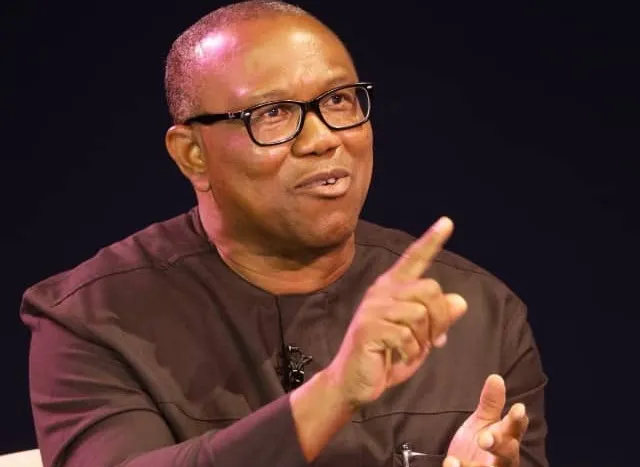

Peter Obi did not become politically famous by following the well-worn paths of Nigerian political ambition. He earned his national reputation through a governorship that his supporters describe in terms of frugality, transparency, and development — qualities rare enough in Nigerian state governance to become remarkable. His presidential campaign in 2023 generated a movement — the “Obidient” movement — that was unprecedented in its grassroots digital energy. Whether one agrees with his politics or not, his story is one of the most instructive in understanding how contemporary Nigerian political identity is shifting.
Peter Obi Biography
| Full Name | Peter Gregory Obi |
|---|---|
| Date of Birth | 19 July 1961 |
| Age | 64 years old (as of 2026) |
| Place of Birth | Onitsha, Anambra State, Nigeria |
| Nationality | Nigerian |
| Ethnicity | Igbo |
| Religion | Christian (Catholic) |
| Occupation | Politician, Businessman |
| Education | Christ the King College, Onitsha; University of Nigeria, Nsukka |
| Wife | Margaret Brownson Obi |
| Children | Two |
| Known For | Governor of Anambra State (2006–2014), Labour Party presidential candidate (2023) |
Early Life and Background
Peter Gregory Obi was born on 19 July 1961 in Onitsha, Anambra State, to a devout Christian family from Agulu. Onitsha, one of the largest commercial cities in West Africa, gave him an early exposure to trade and commerce that would shape his later career as a businessman. His background was not aristocratic or politically connected — he built his public identity through business success first, and politics second. He is of Igbo ethnicity, one of Nigeria’s largest and most entrepreneurially active ethnic groups.
Education
Peter Obi attended Christ the King College in Onitsha for his secondary education, where he obtained his West African Examinations Council (WAEC) certificate. He went on to the University of Nigeria, Nsukka — one of Nigeria’s premier academic institutions — where he studied Philosophy. His educational background in Philosophy has been a point of interest to analysts, given his reputation for data-driven, logical argumentation in political discourse.
Career Journey
Before entering politics, Peter Obi built a substantial business career in banking and commerce. He was Chairman of several companies and developed expertise in finance and trade that would inform his approach to governance. His political career began when he won the Peoples Democratic Party (PDP) gubernatorial primary for Anambra State in 2006. His candidacy was controversially substituted by the party, prompting a legal battle that went all the way to the Supreme Court. The court ruled in his favour, and he was sworn in as Governor of Anambra State in October 2007.
His governorship (2007–2014, across two terms, though the first was briefly interrupted before judicial restoration) became notable for its fiscal conservatism and documented efforts to reduce waste in state expenditure. He is credited with improving Anambra’s internally generated revenue, reducing dependence on federal allocations, and investing in infrastructure, education, and healthcare. He left office in March 2014 and was succeeded by Willie Obiano.
After leaving government, President Goodluck Jonathan appointed him as Chairman of the Nigerian Securities and Exchange Commission (SEC). In 2018, he was announced as the running mate to Atiku Abubakar of the Peoples Democratic Party for the 2019 presidential election; the Atiku-Obi ticket finished second to incumbent President Muhammadu Buhari.
In 2022, he made a dramatic break from the PDP, defecting to the Labour Party and positioning himself as the party’s presidential candidate for the 2023 general election. His campaign caught the imagination of a generation of young, predominantly urban, digitally active Nigerians who coalesced around the “Obidient” movement. Though he came third in the official results — with 6.1 million votes, behind winner Bola Tinubu and the PDP’s Atiku Abubakar — he challenged the results in court, arguing widespread irregularities.
On 31 December 2025, Obi defected from the Labour Party to the African Democratic Congress (ADC), citing patriotism and national interest. In May 2026, he resigned from the ADC — signalling continued political repositioning ahead of the 2027 general elections.
Personal Life
Peter Obi is married to Margaret Brownson Obi, and they have two children. He is known for his modest personal lifestyle and has often been photographed carrying his own bags and travelling in economy class — behaviour that has become part of his political brand as someone who does not regard public office as a route to personal enrichment.
Religion
He is a devout Catholic Christian. His faith has been a consistent reference point in his public speaking, and he has spoken often about public service as a moral obligation rooted in his religious values.
Net Worth
Peter Obi’s net worth has been the subject of public discussion. As a successful businessman before and during his political career, he has accumulated significant wealth. Asset declarations filed during his governorship and subsequent roles indicated substantial holdings. Specific figures vary widely across sources and should be treated with caution, as none are officially certified by Peter Obi himself.
Known For
Peter Obi is known for his two terms as Governor of Anambra State (with a reputation for fiscal discipline), his Labour Party presidential campaign in 2023 that generated the “Obidient” movement, his partnership with Atiku Abubakar as running mate in 2019, and his continued political activism ahead of 2027. He is also known for his personal frugality and data-centred approach to public discourse.
Peter Obi’s Governance Philosophy
What made Peter Obi a phenomenon rather than simply a candidate was the specificity of his governance argument. While most Nigerian politicians speak in generalities about development and progress, Obi spoke in numbers — savings rates, budget allocations, endowment fund figures, infrastructure investments. He documented his Anambra governorship with a data-driven rigour that was unusual in Nigerian political discourse, producing statistics about how much his administration saved, how much was invested, and what the measurable outcomes were. Whether all these figures withstand independent scrutiny has been debated; the fact that he made this kind of argument at all distinguished him sharply from most of his contemporaries.
His favourite phrase — “production over consumption” — became a rhetorical signature, a shorthand for a broader argument that Nigeria’s economic problems stem from a structural preference for importing and spending over producing and saving. It is a Keynesian-inflected argument about the structure of a petro-state, and while critics have questioned how implementable his proposals were, the argument itself was coherent and more sophisticated than most of what passed for economic policy discussion in the 2023 campaign.
Peter Obi and the Obidient Movement
The Obidient Movement that grew around Peter Obi’s 2023 campaign was genuinely unprecedented in Nigerian democratic history. It was driven primarily by young Nigerians — many of them first-time voters, many of them digitally native — who had lost patience with the two dominant parties and their recycled candidates. The movement organised online with a speed and scale that the traditional party structures were not equipped to counter, generating voter registration drives, public events, and media content at a volume that the Labour Party as an institution could never have produced on its own.
Obi won both Lagos — Nigeria’s commercial capital and a traditional APC stronghold — and Abuja, the federal capital, in the official results. These were remarkable results for a third-party candidate. The fact that he came third overall reflected the continuing structural advantages of the PDP and APC in terms of organisational reach, financial muscle, and decades of patronage networks. But the 6.1 million votes he received, and the intensity of his support among young urban Nigerians, suggested that his political moment — if he can find the right institutional vehicle for it — may not have fully arrived yet.
Peter Obi’s Political Evolution in 2025-2026
The period from the end of his Labour Party candidacy through his defection to the ADC at the end of 2025 and his subsequent resignation from the ADC in May 2026 has been politically turbulent. His supporters from the Obidient Movement have watched his party movements with a mixture of hope and anxiety — hope that he is positioning for an effective 2027 run, anxiety that the institutional instability undermines the very message of principled governance he championed in 2023. His declaration in May 2025 that “politics for me is not about position; it is about doing the right thing” reflects a rhetorical commitment to principle that his supporters are holding him to, whatever institutional form that commitment eventually takes.
Conclusion
Peter Obi’s story is still being written. The 2023 presidential campaign transformed him from a respected but regionally focused former governor into a national political phenomenon, particularly among young Nigerians who felt their aspirations had finally found a credible political vehicle. His continued party movement and repositioning in 2025 and 2026 suggest a man who is not done with Nigerian politics — and whose next chapter, ahead of 2027, is being watched closely.
Frequently Asked Questions (FAQs)
How old is Peter Obi?
He was born on 19 July 1961, making him 64 years old as of 2026.
What party does Peter Obi belong to?
As of May 2026, he has recently resigned from the African Democratic Congress (ADC). His next political affiliation ahead of the 2027 elections was not confirmed at the time of writing.
What is the Obidient movement?
It is a grassroots political movement of supporters who coalesced around Peter Obi’s 2023 presidential campaign, particularly among young, digitally active Nigerians who identified with his message of fiscal responsibility and good governance.
Who is Peter Obi’s wife?
His wife is Margaret Brownson Obi. They have two children.
Did Peter Obi win the 2023 presidential election?
He came third in the official results, with 6.1 million votes, behind Bola Tinubu (who was declared the winner) and Atiku Abubakar of the PDP. He challenged the results in court.
