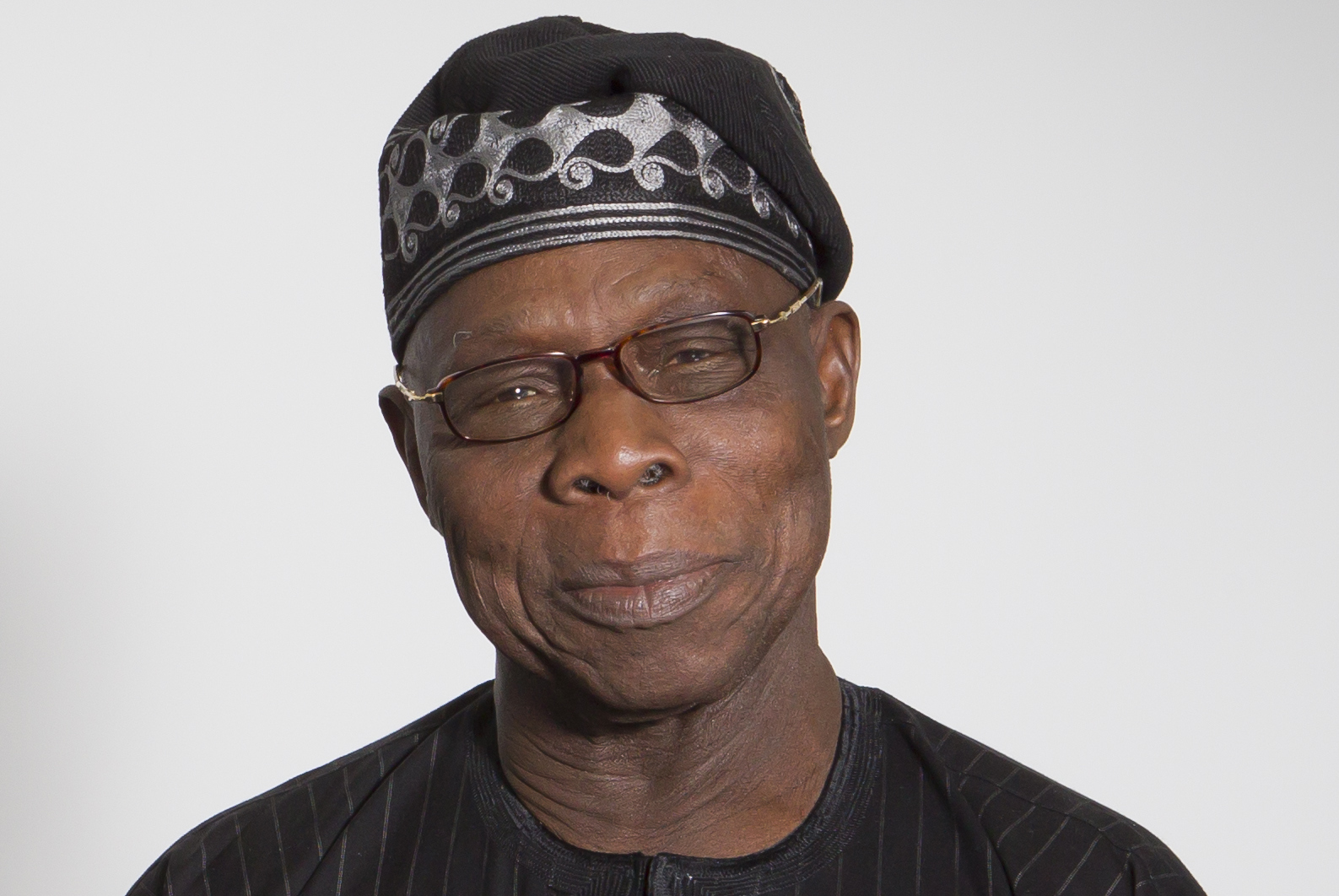

Chief Olusegun Obasanjo is simultaneously one of Nigeria’s most accomplished and most contradictory public figures. He is the only Nigerian leader to have ruled the country twice — once as a military head of state who voluntarily handed power to civilians, and once as an elected civilian president for two four-year terms. He accepted the Biafran surrender that ended the Nigerian Civil War. He was imprisoned under a military dictatorship. He negotiated Nigeria’s historic Paris Club debt cancellation. He was a vocal critic of his own party’s candidate, produced an infamous letter attacking former President Jonathan, endorsed multiple candidates in multiple elections, and has continued to insert himself into Nigerian political life with the confidence of a man who believes he still has something important to say. Whatever one thinks of Obasanjo, his biography is inseparable from the story of modern Nigeria.
Olusegun Obasanjo Biography
| Full Name | Olusegun Matthew Okikiola Ogunboye Aremu Obasanjo GCFR |
|---|---|
| Date of Birth | 5 March 1937 |
| Age | 89 years old (as of 2026) |
| Place of Birth | Abeokuta, Ogun State, Nigeria |
| Nationality | Nigerian |
| Ethnicity | Yoruba |
| Religion | Christian (converted from traditional; later engaged with the RCCG and subsequently founded his own church) |
| Occupation | Military General (retired), Statesman, Farmer, Author |
| Education | Nigerian Military Training College; University of London |
| Known For | Military Head of State (1976–1979); President of Nigeria (1999–2007); Biafran War; Paris Club debt cancellation |
Early Life and Background
Olusegun Obasanjo was born on approximately 5 March 1937 in Abeokuta, Ogun State — the same Yoruba city that would later produce Nobel Laureate Wole Soyinka. Obasanjo grew up in a period of British colonial rule, and his early worldview was shaped by the contradictions of colonial education, which taught him both the tools of modern governance and the asymmetries of power. He attended Baptist Boys’ High School in Abeokuta before joining the Nigerian army, where his career would define him for decades.
Education and Military Career
Obasanjo trained at the Nigerian Military Training College and later studied in the United Kingdom. He rose through the ranks of the Nigerian Army during one of the most turbulent periods in the country’s history — the post-independence decade of coups, counter-coups, and civil war. His most defining military role came during the Nigerian Civil War (1967–1970), where he commanded the Third Marine Commando Division and ultimately accepted the surrender of Biafran forces from Colonel Philip Effiong in January 1970. The “no victor, no vanquished” philosophy that General Yakubu Gowon articulated at that moment was one that Obasanjo administered on the ground in those final days.
Career Journey
Obasanjo became Nigeria’s military head of state on 13 February 1976, following the assassination of General Murtala Mohammed in an unsuccessful coup attempt. As head of state until 1979, he became the first African military ruler to voluntarily transfer power to a democratically elected civilian government — handing power to Shehu Shagari in 1979. This act of institutional restraint established his international reputation as a statesman before he was 45 years old. He received the title of Grand Commander of the Federal Republic (GCFR) and became a prominent figure in African continental politics and international development institutions.
Under the Sani Abacha dictatorship (1993–1998), Obasanjo was imprisoned in 1995 on allegations of plotting a coup — charges he and his supporters have always maintained were fabricated. He spent roughly three years in prison and was released following Abacha’s death in 1998. His imprisonment, paradoxically, enhanced his democratic credentials internationally and made him the preferred candidate of the Peoples Democratic Party and the international community for the 1999 presidential election that marked Nigeria’s return to civilian democracy. He won the election with 63% of the vote.
As civilian President from 1999 to 2007, his most significant economic achievement was the Paris Club debt deal — engineered by his Finance Minister Ngozi Okonjo-Iweala — which cancelled $18 billion of Nigeria’s $30 billion external debt. He also oversaw a period of economic reforms, the privatisation of state enterprises, and the early years of the anti-corruption agenda through the Economic and Financial Crimes Commission (EFCC) and the Independent Corrupt Practices Commission (ICPC). He clashed dramatically with his Vice President Atiku Abubakar in his second term, in a political feud that consumed significant governmental bandwidth.
In his post-presidential years, Obasanjo has remained an opinionated and often interventionist voice in Nigerian and African affairs. He has written extensively, farmed at his Ota farm in Ogun State, and engaged in continental diplomacy. He tore up his PDP membership card in 2015 and endorsed the APC, only to later criticise the Buhari government and engage in the complex political positioning of an elder statesman who cannot quite bring himself to step back from the arena.
Personal Life
Obasanjo has been married multiple times and has numerous children across his various relationships. His personal life has attracted controversy over the years, including a public dispute with his son Gbenga Obasanjo. He founded his own religious organisation, the Olusegun Obasanjo Presidential Library, and has been connected to various religious movements across his life. He is a farmer who takes genuine pride in agricultural production at his Ota farm.
Religion
Obasanjo’s religious journey has been complex — from traditional Yoruba beliefs in his upbringing to Anglican Christianity, to engagement with the RCCG, to founding his own organisation. His spiritual journey reflects the broader pluralism of Yoruba religious experience and has been a subject of public commentary throughout his life.
Net Worth
Olusegun Obasanjo’s net worth is not publicly confirmed. Over nine decades of public life, he has accumulated wealth through his farm, book royalties, speaking fees, and various business interests. He has been the subject of corruption allegations connected to his presidential tenure — particularly regarding the Petroleum Technology Development Fund — though no criminal conviction has been secured. His Ota farm is believed to be one of the largest private agricultural operations in southwestern Nigeria.
Known For
Obasanjo is known for commanding the acceptance of Biafra’s surrender in the Nigerian Civil War; for voluntarily handing power to civilians as military head of state in 1979; for his imprisonment under Abacha (1995–1998); for winning the 1999 presidential election and serving two terms; for the Paris Club debt cancellation; for his notorious 2014 letter publicly attacking Goodluck Jonathan; and for his enduring, often disruptive presence in Nigerian political commentary.
Conclusion
Olusegun Obasanjo at 89 remains what he has always been — impossible to ignore. He is Nigeria’s most consequential living political figure by the sheer weight of the historical moments he has inhabited. He ended a civil war, gave up military power voluntarily, was imprisoned, won a democratic election, managed Nigeria through critical economic reforms, and has spent two decades as an elder statesman whose opinions still cause political ripples. Whatever the ultimate assessment of his governance legacy, his biography is among the most instructive documents in understanding how power, character, and national history intersect in post-independence Africa.
Olusegun Obasanjo’s Controversial Political Legacy
No honest assessment of Olusegun Obasanjo’s legacy can avoid the controversies that ran alongside his achievements. His civilian presidency (1999–2007) was marked by a third-term agenda — an alleged attempt to amend the constitution to allow him a third term in office — that was eventually defeated by the National Assembly and that generated a lasting stain on his democratic reputation. Having been celebrated for voluntarily handing over power in 1979, the suggestion that he sought to extend his civilian tenure by constitutional manipulation struck many Nigerians as a fundamental betrayal of the very principle that had made him internationally admired.
The relationship between his administration and the EFCC — established during his tenure ostensibly to fight corruption — was always complicated by accusations that the commission was selectively deployed against political opponents rather than applied universally. His handling of the Niger Delta militancy, which intensified during his second term, involved both military operations that attracted human rights criticism and economic negotiations that produced some durable results, most notably the Niger Delta Development Commission. His privatisation programme transferred many state-owned enterprises to private hands, with results that have been mixed — some privatised entities thrived, others collapsed or fell into different forms of dysfunction.
Obasanjo’s Diplomatic Influence in Africa
Outside Nigeria, Obasanjo’s standing as an African statesman has been more consistently positive than his domestic reputation. He was a founding member of the African Peer Review Mechanism under NEPAD; he played a significant role in African Union deliberations on governance and democracy; he was a mediator in multiple African peace processes; and he was sufficiently trusted by major Western governments and multilateral institutions to serve as an interlocutor on African affairs through the 2000s and 2010s. His farm in Ota and his presidential library have provided institutional bases for continued engagement, and his willingness to continue publishing — books, letters, and essays — on African political affairs has kept him in the public intellectual conversation long after most former heads of state have retreated into comfortable obscurity.
The 2014 Letter and Jonathan’s Defeat
Obasanjo’s most politically explosive post-presidential act was the 18-page public letter he wrote to President Goodluck Jonathan in December 2013, which he later released publicly. The letter, which accused Jonathan’s administration of running a government characterised by incompetence, corruption, and ethnic divisiveness, was unprecedented in recent Nigerian political history — a former president publicly excoriating a sitting president from the same party in terms that were specific, personal, and damaging. The letter’s timing — ahead of the 2015 election cycle — contributed to the political environment that ultimately saw Jonathan defeated. Obasanjo’s subsequent public tearing of his PDP membership card and endorsement of the APC ticket underscored how deliberate and consequential his intervention was. Whether it was motivated by principle, personal grievance, or political calculation — or some combination of all three — remains a matter of debate in Nigerian political circles.
Frequently Asked Questions (FAQs)
How old is Olusegun Obasanjo?
He was born on approximately 5 March 1937 and is 89 years old as of 2026.
How many times did Obasanjo rule Nigeria?
Twice: first as military Head of State from 1976 to 1979, and then as an elected civilian President from 1999 to 2007.
What is Obasanjo’s most celebrated achievement?
His voluntary transfer of power to a civilian government in 1979 as military head of state is often cited internationally, along with his role in the Paris Club debt cancellation that relieved Nigeria of $18 billion in external debt in 2005.
Was Obasanjo ever imprisoned?
Yes, he was imprisoned in 1995 during the Abacha military dictatorship on allegations of plotting a coup. He was released in 1998 following Abacha’s death.
Is Obasanjo still politically active?
Yes, despite his age, he continues to publish, speak publicly, engage in continental diplomacy, and comment on Nigerian politics — most recently offering opinions and positioning around the 2027 election cycle.
