
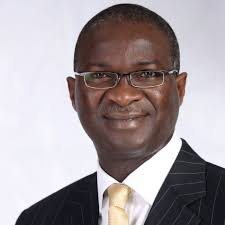

Babatunde Raji Fashola is one of Nigerian governance’s most studied case studies — a lawyer by training who, through a combination of legal precision, infrastructure ambition, and political durability, transformed Lagos from a city of spectacular dysfunction into one of Africa’s most consequential urban projects. His tenure as Lagos State Governor remains, for many urban policy analysts, a benchmark for what Nigerian state governance can achieve when competence meets political will. His subsequent career as a federal minister extended that legacy onto the national stage.
Babatunde Fashola Biography
| Full Name | Babatunde Raji Fashola CON SAN |
|---|---|
| Date of Birth | 28 June 1963 |
| Age | 62 years old (as of 2026) |
| Place of Birth | Lagos, Nigeria |
| Nationality | Nigerian |
| Ethnicity | Yoruba |
| Occupation | Lawyer (SAN), Politician |
| Education | University of Benin (LLB, 1987); Nigerian Law School |
| Wife | Abimbola Fashola |
| Children | Two |
| Known For | Governor of Lagos State (2007–2015); Federal Minister of Power, Works and Housing (2015–2019); Federal Minister of Works and Housing (2019–2023) |
Early Life and Background
Babatunde Raji Fashola was born on 28 June 1963 in Lagos, Nigeria. He grew up in Nigeria’s commercial capital at a time of post-independence development and economic expansion, and his career would ultimately return him to that city in the most consequential possible way. His father’s hope that his son would become a lawyer — a reason behind naming him after the legendary legal icon Chief Frederick Rotimi Williams — proved prophetic. Fashola did indeed become a lawyer, and one of Nigeria’s most distinguished at that.
Education
Fashola earned his LLB at the University of Benin in 1987, after which he was called to the Nigerian Bar. He went on to build a successful legal career, eventually being conferred the prestigious rank of Senior Advocate of Nigeria (SAN) — one of the highest designations available to legal practitioners in the country. He was inducted as a Fellow of the Nigerian Institute of Chartered Arbitrators in 2008. His legal training gave him a particular approach to governance: methodical, document-conscious, and attentive to process — qualities that distinguished his administration from many predecessors.
Career Journey
Before becoming Governor, Fashola served as Chief of Staff to Bola Tinubu, Lagos State Governor, from 2002 to 2006. This apprenticeship under one of Nigeria’s most effective political operatives gave him a masterclass in how to build and sustain political power in Lagos. When Tinubu’s tenure concluded, Fashola was the chosen successor, winning the governorship election on 14 April 2007 on the Action Congress platform. He was re-elected on 26 April 2011.
His eight years as Governor of Lagos State (2007–2015) are remembered for a wide-ranging infrastructure transformation. He introduced Bus Rapid Transit (BRT) buses with dedicated lanes — the first of their kind in Nigeria — reducing commute times for thousands of residents. He initiated the Lagos Light Rail project, expanded the Lekki-Epe Expressway, advanced the ambitious Eko Atlantic City development on reclaimed land, and invested heavily in public schools, healthcare, and environmental management. Lagos was not transformed into a perfect city under Fashola, but its trajectory changed — and that change was visible.
In November 2015, President Muhammadu Buhari appointed him Federal Minister of Power, Works and Housing, giving him responsibility for three of Nigeria’s most critically underdeveloped sectors simultaneously. In August 2019, the portfolio was restructured and he became Minister of Works and Housing, a role he held until 2023. During this period, he pushed forward the completion of the Second Niger Bridge — a project that had been debated since the 1980s and was finally completed in 2023. He oversaw the signing of approximately 800 road contracts and the rehabilitation of 13,000 kilometres of roads.
Personal Life
Babatunde Fashola is married to Abimbola Fashola, and they have two children. He has kept his family largely out of the public eye, consistent with the reserved, professional persona he projects in public life.
Religion
He is a Christian and a member of the Yoruba community. Faith has been a consistent but private aspect of his public identity — he speaks about it without making it a dominant political frame.
Net Worth
Fashola’s net worth is not publicly confirmed. He built his wealth through a successful legal career before entering politics, and has managed public office with a reputation for relative financial discipline compared to many Nigerian political peers. Specific estimates are speculative and should not be cited as verified figures.
Known For
Babatunde Fashola is known for his transformative tenure as Lagos State Governor (2007–2015), including the BRT system, the Lagos Light Rail, and major infrastructure investments; his role as Federal Minister responsible for completing the Second Niger Bridge; his legal career as a Senior Advocate of Nigeria; and his political partnership with Bola Tinubu during the formative years of the APC’s rise.
Conclusion
Babatunde Fashola’s biographical significance lies in what he did with power when he had it. In a political environment where infrastructure promises frequently evaporate between the podium and the pavement, he delivered tangible, measurable change — in Lagos, and later, on the national scale. His career represents an argument that Nigerian governance can work when the right combination of expertise, political backing, and institutional commitment align.
Babatunde Fashola’s Lagos Transformation in Detail
The transformation of Lagos under Babatunde Fashola between 2007 and 2015 is worth examining in concrete terms because the specific initiatives tell a more nuanced story than the general reputation. The BRT (Bus Rapid Transit) system, launched in 2008, introduced air-conditioned high-capacity buses running on dedicated lanes in a city where commuting had been an exhausting, dangerous ordeal of molue buses and gridlock. The system reduced journey times for hundreds of thousands of daily commuters and established an infrastructure template that other Nigerian cities have since sought to replicate. The challenge of sustaining the BRT — maintaining vehicles, managing routes, keeping fares affordable — has been an ongoing one, but the initial creation of the system was itself a significant logistical and political achievement.
The Eko Atlantic City project — a development on reclaimed land off Victoria Island, designed as a future financial district for West Africa — was one of the most ambitious urban development initiatives in Africa’s history. Fashola’s administration advanced this project significantly during his tenure, establishing it as a credible long-term development rather than a paper ambition. The environmental debate around reclaimed land and coastal erosion has continued, but the sheer scale of what was attempted — creating new urban land from the Atlantic Ocean — speaks to an administration willing to think in generational rather than electoral time scales.
Fashola’s Federal Ministerial Record
The Second Niger Bridge — a project that had been promised to Nigerians for decades and had become a shorthand for the gap between political promise and delivery in Nigeria — was completed under Fashola’s watch as Minister of Works. The bridge’s opening in 2023, connecting Onitsha and Asaba and reducing travel times and vehicle congestion across the critical southeast-southwest corridor, was a genuinely significant infrastructure milestone. It was also a moment that validated Fashola’s approach: prioritising completion of existing projects over the announcement of new ones, and focusing on the basics of physical connectivity that economic development depends upon.
His management of the Power, Works and Housing portfolio — one of the most challenging in Nigerian governance given the historical dysfunction in each of those sectors — was also notable for its methodical, lawyer-like approach to process. He was not a minister known for the kind of populist gestures that generate headlines; he was known for detail, for documentation, and for the accumulation of smaller decisions that, over time, produced outcomes. The ongoing Lagos-Ibadan Expressway rehabilitation — which remains incomplete as of 2026 — is a counterpoint, illustrating the limits of even competent ministerial attention in a Nigerian public procurement environment characterised by corruption, capacity gaps, and political interference.
Fashola’s Place in Nigerian Political History
Babatunde Fashola occupies a distinctive position in Nigerian political history as a technocratic politician — someone whose public reputation rests more on his governance record than on his political operativeness or personal charisma. He is not the most visible or the most flamboyant figure in Nigerian politics; he is, arguably, one of the most competent. In a political culture where competence and visibility are often in inverse proportion, his career represents a different model — one built on the unglamorous work of institutional management and infrastructure delivery. His gradual withdrawal from the political scene since 2023 may simply reflect a transition to private life; it may also reflect the assessment of a precise, legally trained mind that his particular moment in Nigerian public life has passed.
Frequently Asked Questions (FAQs)
How old is Babatunde Fashola?
He was born on 28 June 1963 and is 62 years old as of 2026.
What was Babatunde Fashola’s most notable achievement as Lagos Governor?
He introduced the Bus Rapid Transit (BRT) system with dedicated lanes, initiated the Lagos Light Rail project, and drove major infrastructural investments that changed the city’s daily life and long-term development trajectory.
Who is Babatunde Fashola’s wife?
He is married to Abimbola Fashola. They have two children.
What did Fashola do as a federal minister?
He served as Minister of Power, Works and Housing (2015–2019) and then Minister of Works and Housing (2019–2023), during which period the Second Niger Bridge was completed and hundreds of road contracts were signed.
Is Babatunde Fashola a lawyer?
Yes, he is a Senior Advocate of Nigeria (SAN), one of the country’s highest legal designations. He practised law for 15 years before entering full-time politics.
