
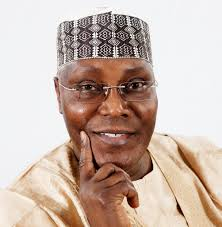

Few names in Nigerian politics carry as much historical weight — or generate as much polarised opinion — as Atiku Abubakar. A self-made billionaire, a former Vice President, and a man who has contested the Nigerian presidency six times without winning, his career spans the full spectrum of the Nigerian political experience: military patronage, democratic governance, bitter rivalry, business empire-building, and the perpetual optimism of a man who refuses to accept that his time has passed. Whatever one thinks of his politics, his biography is among the most revealing in understanding how power moves in Nigeria.
Atiku Abubakar Biography
| Full Name | Atiku Abubakar GCON |
|---|---|
| Date of Birth | 25 November 1946 |
| Age | 79 years old (as of 2026) |
| Place of Birth | Jada, Adamawa State, Nigeria |
| Nationality | Nigerian |
| Ethnicity | Fulani |
| Religion | Islam |
| Occupation | Politician, Businessman |
| Education | School of Hygiene Kano; Ahmadu Bello University (Zaria); Nigerian Law School |
| Wives | Four (has been married four times) |
| Known For | Vice President of Nigeria (1999–2007); Six-time presidential aspirant |
Early Life and Background
Atiku Abubakar was born on 25 November 1946 in Jada, in what is now Adamawa State, in northeastern Nigeria. He grew up in a region shaped by the Fulani cultural tradition, Islamic values, and the economic rhythms of the Nigerian interior. His background was not wealthy — he built his fortune through his own efforts, primarily in business and the opportunities that political proximity made available. He comes from Fulani ethnic heritage, one of West Africa’s most widely dispersed and historically significant ethnic groups.
Education
Atiku’s educational path was practical and professional. He attended the School of Hygiene in Kano and subsequently went on to Ahmadu Bello University in Zaria. He also attended the Nigerian Law School, though he ultimately pursued customs administration as a career rather than legal practice. His rise through the Nigeria Customs Service, where he attained a senior position, gave him both a professional foundation and, critically, the institutional connections that would later fuel his business career and political rise.
Career Journey
Before politics, Atiku Abubakar built a business empire of considerable scale. His most prominent venture is American University of Nigeria (AUN) in Yola, Adamawa State — a private university he founded in 2003 that has become one of Nigeria’s most respected private tertiary institutions. His business interests span real estate, education, and multiple commercial sectors, making him one of Nigeria’s wealthiest individuals.
His political career began with attempts to become Governor of Adamawa State in 1990 and 1996 under military-transition programmes, both unsuccessful. He won the governorship in 1998 under the Peoples Democratic Party, but before being sworn in, he accepted the vice presidential slot on Olusegun Obasanjo’s presidential ticket for the 1999 elections — a decision that proved transformative. The Obasanjo-Atiku ticket won, and he served two terms as Vice President from 1999 to 2007.
His time as VP was marked by significant policy contributions, particularly as Chairman of the National Economic Council and head of the National Council on Privatization. He also oversaw a controversial privatisation programme that sold many state-owned enterprises. His relationship with President Obasanjo, however, deteriorated dramatically in his second term, culminating in a public political rupture over Obasanjo’s alleged third-term agenda. Atiku left the PDP for the Action Congress and ran for president in 2007; he came third.
He has since contested the presidency under different party platforms in 2011, 2015, 2019, and 2023 — accumulating a record of presidential campaigns that is unmatched in Nigerian democratic history. His 2019 campaign was the PDP’s most competitive in years; the 2023 campaign placed him second, with Tinubu of the APC winning. He continues to be active in Nigerian politics and has been involved in coalition discussions ahead of the 2027 general elections.
Personal Life
Atiku Abubakar has had four wives, which is consistent with Islamic tradition. He has numerous children — some estimates suggest more than 28 across his various marriages. His family life, including the marriages, has attracted significant public attention over the years. One of his most prominent children, Adaora Atiku-Abubakar, has been active in philanthropy and business.
Religion
He is a Muslim and a Hajj pilgrim. His Islamic faith has been a consistent part of his public identity, and he has consistently positioned himself as a bridge-builder between Nigeria’s Muslim north and Christian south.
Net Worth
Atiku Abubakar is consistently listed among Nigeria’s wealthiest individuals. His net worth is estimated by various international financial media at several billion US dollars, though official confirmation is not available. His wealth comes primarily from his business empire, real estate, and investments across multiple sectors. He founded the American University of Nigeria and maintains extensive business interests in Adamawa State and beyond.
Known For
Atiku Abubakar is known for his two terms as Nigeria’s Vice President under Olusegun Obasanjo (1999–2007), his six presidential campaigns, his founding of the American University of Nigeria, and his status as one of Nigeria’s wealthiest and most politically durable figures. He is also known for his complex political relationships, particularly the public fallout with Obasanjo and his multiple party affiliations across his career.
Conclusion
Atiku Abubakar at 79 continues to represent a specific kind of Nigerian political figure: one who has positioned himself as perennially ready for the presidency, regardless of the outcome of any given election. Whether that persistence ultimately yields the result he has sought for more than three decades, or whether 2027 brings yet another campaign, his biography already represents one of the most tenacious political careers in West African democratic history.
Atiku Abubakar’s Business Empire and Wealth Creation
Atiku Abubakar’s wealth is one of the most discussed and least transparently documented in Nigerian public life. What is known is that his business interests span multiple sectors and that the American University of Nigeria he founded in Yola, Adamawa State, represents his most visible and arguably most constructive private investment. The university, established in 2003 and modelled on American liberal arts education principles, has grown into one of Nigeria’s most respected private tertiary institutions, attracting students from across the country and providing an educational product that, by most accounts, is genuinely competitive in quality.
His commercial interests beyond the university include real estate investments in Abuja and other Nigerian cities, transport and logistics interests, and various commercial holdings. The source of the initial capital for these ventures — whether from his Nigeria Customs Service career, political patronage during the transition to democracy, or private business activity — has been a subject of significant public and journalistic inquiry. He has been investigated and cleared of some allegations; others remain matters of ongoing public dispute. What is not disputed is that he is among Nigeria’s wealthiest private citizens, with a lifestyle and resource base that have consistently funded six presidential campaigns over three decades.
Atiku Abubakar and Nigerian Democratic Development
One of the more nuanced arguments about Atiku Abubakar’s political career is that his persistence — six presidential campaigns, multiple party affiliations, continuous engagement with Nigerian democratic processes — has itself contributed something to the consolidation of Nigeria’s democratic culture. Each time he ran, was defeated, and then engaged with the legal processes to challenge results he considered flawed, rather than organising extra-constitutional resistance, he implicitly reinforced the idea that elections were the appropriate mechanism for determining political leadership. Whether this was principled democratic conviction or pragmatic calculation is a question that Nigerian political analysts continue to debate.
His March 2025 announcement that he and other opposition leaders were planning a coalition ahead of the 2027 elections — while he and Peter Obi simultaneously denied making any deal — reflects the ongoing complexity of his political positioning. He has been a senior figure in Nigerian politics for more than 30 years and understands better than most that political alliances in Nigeria are made and unmade with extraordinary speed. Whether the 2027 elections produce a competitive coalition or another fragmented opposition will depend in part on whether figures like Atiku can subordinate their individual ambitions to a collective strategy — something that has historically proved difficult in Nigerian opposition politics.
Atiku Abubakar’s Legacy and Continuing Relevance
At 79, Atiku Abubakar is a man whose political career has outlasted the predictions of many observers who expected him to fade from relevance after successive electoral defeats. Part of his durability is financial — money sustains political machines, and his access to resources has never dried up. Part of it is organisational — he has built networks in the Nigerian north particularly that represent durable political capital. And part of it is personal — he appears genuinely motivated by a desire to be president that no amount of defeat has extinguished. Whether that desire produces a seventh campaign in 2027, and whether that campaign achieves what the previous six did not, will be one of the defining questions of the next chapter of Nigerian democratic history.
Frequently Asked Questions (FAQs)
How old is Atiku Abubakar?
He was born on 25 November 1946 and is 79 years old as of 2026.
How many times has Atiku Abubakar run for president?
He has run for the Nigerian presidency six times: in 1993, 2007, 2011, 2015, 2019, and 2023.
Was Atiku Abubakar ever Vice President of Nigeria?
Yes, he served as Nigeria’s Vice President from 1999 to 2007 under President Olusegun Obasanjo.
Who is Atiku Abubakar’s wife?
He has been married to four women across his life, in accordance with Islamic tradition. His most prominent marriage is to Jennifer Douglas, an American of Nigerian descent, who has been active in philanthropy.
What business is Atiku Abubakar known for?
He is the founder of the American University of Nigeria (AUN) in Yola, and maintains extensive business interests in real estate, commerce, and other sectors across Nigeria.
