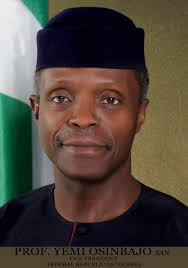

Professor Yemi Osinbajo is one of the few Nigerian politicians whose biography reads simultaneously as an academic career and a political one — a combination that is genuinely unusual, and one that shaped both his appeal and his approach to governance. A lawyer, professor, pastor, and public servant, he served as Nigeria’s Vice President from 2015 to 2023 and became particularly well known for the periods in which he acted as President while Muhammadu Buhari was receiving medical treatment abroad. His tenure raised fundamental questions about decision-making authority, presidential health, and what it means to lead Nigeria’s complex, oil-dependent, security-challenged federation.
Yemi Osinbajo Biography
| Full Name | Oluyemi Oluleke Osinbajo |
|---|---|
| Date of Birth | 8 March 1957 |
| Age | 69 years old (as of 2026) |
| Place of Birth | Lagos, Nigeria |
| Nationality | Nigerian |
| Ethnicity | Yoruba |
| Religion | Christian (Redeemed Christian Church of God) |
| Occupation | Lawyer, Professor, Former Vice President of Nigeria |
| Education | University of Lagos (LLB, LLM); London School of Economics (PhD) |
| Wife | Dolapo Osinbajo (née Soyode) |
| Children | Three |
| Known For | Vice President of Nigeria (2015–2023), Lagos State Attorney General and Commissioner for Justice (1999–2007), acting President of Nigeria |
Early Life and Background
Yemi Osinbajo was born on 8 March 1957 in Lagos, Nigeria. He grew up in a Lagos that was still finding its footing as a post-independence metropolis, and his intellectual development was shaped by strong educational institutions in the city. He is of Yoruba ethnic heritage and has been a committed Christian throughout his life — a member of the Redeemed Christian Church of God (RCCG), where his father-in-law, Pastor Enoch Adeboye, is the General Overseer. This pastoral connection would prove both a personal support and a political talking point during his career.
Education
Osinbajo completed his legal education at the University of Lagos, earning both his LLB and his LLM at that institution. He went on to the London School of Economics (LSE), one of the world’s most prestigious social science and law institutions, where he earned his PhD. He returned to Nigeria and joined the faculty at the University of Lagos, where he taught commercial law while also practising privately. He combined teaching with legal practice for approximately 15 years before entering government full-time. His academic career — which included producing numerous publications on corporate law and commercial regulation — gives him a credential base that few Nigerian politicians can match.
Career Journey
Yemi Osinbajo’s first major government role came in 1999 when then-Lagos State Governor Bola Tinubu appointed him as the State’s Attorney General and Commissioner for Justice — a post he held for eight years through 2007. His Lagos tenure is remembered for legal and institutional reforms, and for his role in the revenue collection structures that generated significant financial criticism in later years (the Alpha Beta consulting controversy). Osinbajo has not been directly implicated in wrongdoing, but the association was politically noted during his national career.
In December 2014, Muhammadu Buhari announced Osinbajo as his running mate for the 2015 presidential election. The APC ticket won, defeating incumbent President Goodluck Jonathan — a historic moment in Nigerian democratic history, marking the first time an incumbent president lost a general election to an opposition candidate. Osinbajo was sworn in as Vice President on 29 May 2015 and re-elected in 2019.
He served as acting President on multiple occasions when President Buhari traveled abroad for extended medical treatment — most notably in 2017. His decisions during those periods were decisive and at times controversial within the APC’s inner circle: he fired the State Security Service boss Lawal Daura in August 2018 after the SSS’s armed operatives blockaded the National Assembly, a move that demonstrated executive authority and surprised observers who expected a more cautious acting president. His helicopter also crashed in Kabba, Kogi State in February 2019, and he survived without serious injury — delivering a campaign speech shortly thereafter.
In April 2022, he declared his intention to run for President in the 2023 APC primaries. He came third in the party’s presidential primaries held in June 2022, with 235 delegate votes — falling well behind eventual APC candidate Bola Tinubu. His tenure as Vice President concluded on 25 May 2023. Since then, he has returned to public intellectual and religious life, and was named chair of the Commonwealth observation group for the Sierra Leone 2023 presidential elections.
Personal Life
Yemi Osinbajo is married to Dolapo Osinbajo (née Soyode), daughter of the RCCG General Overseer Pastor Enoch Adeboye. The couple have three children. His family’s religious life is deeply intertwined with his public identity — he has described his Christian faith as the moral foundation of his approach to public service.
Net Worth
Yemi Osinbajo’s net worth is not officially confirmed. His income has been derived from his legal career, academic positions, government salaries, board memberships, and speaking fees. He is not considered among Nigeria’s wealthiest public figures, in part because of his reputation for relative personal austerity compared to many political peers.
Known For
Yemi Osinbajo is known for his eight years as Nigeria’s Vice President, his tenures as acting President during Buhari’s medical absences, his academic career as a professor of law at the University of Lagos, his PhD from the London School of Economics, his Christian faith and family connection to the RCCG, and his third-place finish in the 2022 APC presidential primaries.
Yemi Osinbajo’s Academic and Legal Career
Before Yemi Osinbajo became a political figure, he was genuinely accomplished in two demanding professional fields simultaneously: law and academia. His teaching career at the University of Lagos — where he was a lecturer and later a professor — ran alongside a private legal practice in commercial law that gave him practical experience beyond the classroom. This dual career path is unusual because the two disciplines often pull professionals in opposite directions: litigation and transactional law demand client responsiveness and time; academic publishing and teaching demand reflection and scholarship. Osinbajo managed both for approximately 15 years, producing publications and supervising students while also building a legal practice of sufficient quality to make him an attractive candidate for high-profile public appointments.
His eight years as Lagos State’s Attorney General and Commissioner for Justice (1999–2007) under Bola Tinubu gave him a practical governance education in one of Nigeria’s most complex institutional environments. Lagos State’s legal and regulatory frameworks, its relationship with the federal government over resource allocation (the famous 13% derivation dispute), and its internal justice administration all required the kind of careful, legalistic management that Osinbajo was positioned to provide. He became, in this period, one of Tinubu’s most trusted institutional lieutenants — a relationship that would shape his later national political career.
Osinbajo as Acting President: The 2017 Period
The most consequential and revealing period of Yemi Osinbajo’s vice presidential career was his extended time as acting President in 2017, when Muhammadu Buhari was in the United Kingdom receiving medical treatment. Buhari’s extended absences — at one point lasting approximately 104 days — created a genuine governance vacuum that Osinbajo was expected to fill without exceeding what elements within the presidency considered his mandate. His decision to fire SSS Director-General Lawal Daura in August 2018 — after Daura’s operatives blockaded the National Assembly with armed masked personnel during a political crisis — was widely praised as decisive and appropriate by constitutional scholars, and deeply resented by elements of the Buhari inner circle who preferred a more passive acting presidency.
This tension — between an acting president whose instincts pushed toward decisive action and a presidency whose culture preferred deference — was visible throughout the Buhari administration and reflects a fundamental challenge of the vice presidential role in Nigeria. Osinbajo navigated it as skilfully as the institutional constraints allowed, but the experience also illuminated the structural limitations that made his subsequent presidential ambitions — which he expressed by declaring his intention to run in 2022 — understandable as a desire to occupy the role without the institutional constraints that had come with the second-in-command position.
Osinbajo’s Post-Vice Presidency
Since leaving office in May 2023, Yemi Osinbajo has returned to public intellectual and religious life without the formal political constraints of executive office. His appointment to chair the Commonwealth observation group for the Sierra Leone 2023 presidential elections indicated a continuing international profile. His faith community — the Redeemed Christian Church of God, where his father-in-law is the General Overseer — provides both a spiritual home and an institutional network that will likely play a role in whatever future public engagement he pursues. At 69, with the legal expertise, international recognition, and governance experience his career has generated, his contribution to Nigerian public life is unlikely to be finished simply because his vice presidential tenure is.
Conclusion
Yemi Osinbajo’s eight years as Vice President were a study in navigating institutional loyalty and personal conviction in a difficult governing environment. He served under a president whose style was often opaque, made consequential decisions when thrust into acting roles, and competed for the presidency himself — without winning. His post-office life, combining law, theology, public speaking, and international observation work, suggests a man whose contributions to Nigerian public life are not finished, even if the chapter he always seemed angled toward — the presidency — remains unwritten.
Frequently Asked Questions (FAQs)
How old is Yemi Osinbajo?
He was born on 8 March 1957 and is 69 years old as of 2026.
Is Yemi Osinbajo a pastor?
He is a senior member of the Redeemed Christian Church of God (RCCG), and his father-in-law is the church’s General Overseer Pastor Enoch Adeboye. He has been described as a pastor within the church, though his public roles have been primarily in law and politics.
Where did Yemi Osinbajo get his doctorate?
He earned his PhD from the London School of Economics (LSE).
Who is Yemi Osinbajo’s wife?
He is married to Dolapo Osinbajo, daughter of RCCG General Overseer Pastor Enoch Adeboye.
Did Yemi Osinbajo ever serve as Nigeria’s President?
Yes, he served as acting President of Nigeria on multiple occasions during President Buhari’s medical trips to the United Kingdom, with his 2017 tenure as acting President being the most prolonged and consequential.
