
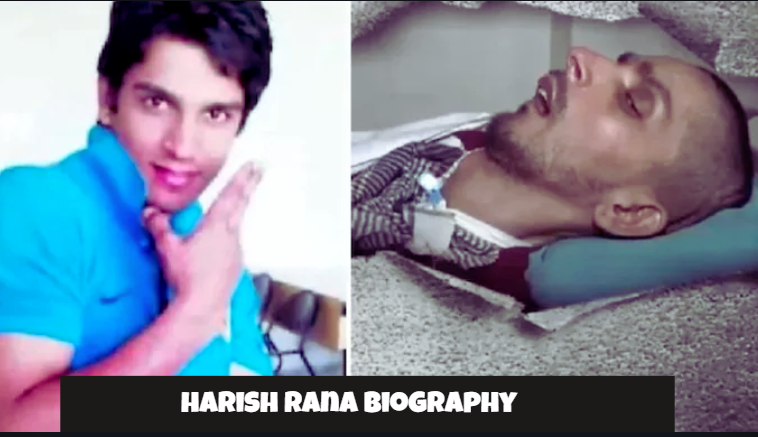

Life can change in a single moment. One day you are planning your future, attending classes, dreaming about a career — and the next moment everything shifts. The story of Harish Rana is one such deeply emotional and widely discussed case in India.
Harish Rana was a young engineering student with a promising future ahead of him. Born in Uttar Pradesh, India, he was known among friends and family as focused, energetic, and passionate about his studies. However, a tragic accident in 2013 altered the course of his life forever.
After a fall from the fourth floor of his paying-guest accommodation while studying in Chandigarh, Harish suffered severe brain injuries that left him in a persistent vegetative state for many years. His condition required constant medical care and life-support systems.
Over time, his story moved beyond a private family struggle and became part of a larger national conversation about medical ethics, law, and human dignity. Courts, doctors, and society were forced to ask difficult questions about life-support treatment and end-of-life decisions.
In this article, we explore Harish Rana’s biography, his early life, family sacrifices, education, accident, and the legal case that drew national attention.
Harish Rana Biography
| Field | Details |
|---|---|
| Full Name | Harish Rana |
| Date of Birth | August 10, 1994 |
| Age (2026) | 32 Years |
| Birthplace | Uttar Pradesh, India |
| Nationality | Indian |
| Religion | Hinduism |
| Profession | Engineering Student |
| University | Panjab University |
| Marital Status | Not Married |
| Wife | None |
| Family | Parents and close relatives |
| Net Worth | Not publicly disclosed |
| Contact | Not publicly available |
Early Life of Harish Rana
Harish Rana was born on August 10, 1994, in Uttar Pradesh, India. Like many children growing up in middle-class Indian families, education was an important part of his upbringing.
From an early age, he showed curiosity and dedication toward his studies. Teachers and family members often described him as disciplined and thoughtful.
His parents supported his dreams and encouraged him to pursue higher education. For them, education was the path to a better future — and Harish embraced that belief wholeheartedly.
Born Place and Childhood
Harish spent his early years in Uttar Pradesh, one of India’s most populous states. The region has produced many professionals, entrepreneurs, and students who move to major cities for higher education.
Growing up, Harish was known as a bright and active child. Friends recall that he enjoyed sports, particularly football, and liked spending time outdoors.
His childhood reflected the typical life of many Indian students — school, family gatherings, and dreams about future careers.
Family Background
The Rana family has always been at the center of Harish’s story.
Although his parents have largely stayed away from public attention, their devotion to their son became widely known after the accident.
For more than a decade, they provided:
-
Round-the-clock care
-
Medical supervision
-
Emotional support
The family reportedly made enormous sacrifices to maintain his treatment, including selling property and reorganizing their lives.
Their dedication showed the depth of parental love and responsibility, even during the most difficult circumstances.
Education and University Life
Harish moved to the Chandigarh region to pursue engineering studies at Panjab University.
University life is often the stage where young people begin shaping their futures. For Harish, this period was filled with ambition and hope.
He stayed in a paying-guest accommodation while attending university classes.
His goal was to build a career in civil or mechanical engineering, a field that offers opportunities in infrastructure projects, construction, and technology.
Friends described him as hardworking and motivated, always focused on building a better future.
Personality and Interests
Before the accident, Harish was known for his energetic personality.
He enjoyed:
-
Sports, especially football
-
Socializing with friends
-
Academic challenges
Those who knew him often described him as someone who believed in hard work and discipline.
In many ways, he was like thousands of other engineering students across India — young people preparing themselves to contribute to society.
The 2013 Accident That Changed Everything
On August 20, 2013, Harish Rana’s life changed forever.
While living in his paying-guest accommodation during his university studies, he fell from the fourth floor of the building.
The fall caused severe head injuries and catastrophic brain damage.
From that moment onward, the path he had planned — graduation, career, independence — disappeared in an instant.
Life, sometimes, can turn like a sudden storm that no one expects.
Medical Condition After the Injury
Following the accident, doctors placed Harish on life-support systems.
His injuries left him in a persistent vegetative state, meaning he lost conscious awareness and could not respond meaningfully to the world around him.
Medical interventions included:
-
Tracheostomy tube to help with breathing
-
Gastrojejunostomy feeding tube for nutrition
-
Continuous medical supervision
Despite medical care, doctors reported no significant neurological recovery over the years.
Years in a Vegetative State
For more than 13 years, Harish remained bedridden and completely dependent on others for care.
His daily life involved:
-
Medical monitoring
-
Nursing care
-
Physiotherapy
-
Artificial feeding
Doctors explained that his condition showed no meaningful improvement over time.
During these years, the emotional and financial burden on the family continued to grow.
Family’s Dedication and Sacrifice
One of the most powerful aspects of Harish’s story is the devotion shown by his parents.
They stayed by his side year after year, refusing to give up hope.
Caring for someone in such a condition requires:
-
Constant attention
-
Financial resources
-
Emotional resilience
The Rana family devoted their lives to supporting Harish, demonstrating extraordinary commitment.
Legal Case and Supreme Court Decision
Eventually, the family approached the Supreme Court of India seeking permission to withdraw life-support treatment.
After reviewing medical reports and expert opinions, the court allowed passive euthanasia in his case.
Passive euthanasia means allowing a patient to pass away naturally by withdrawing life-sustaining medical treatment when recovery is considered impossible.
The decision directed that Harish be transferred to AIIMS Delhi, where doctors would provide palliative care and oversee the withdrawal of artificial life support under medical guidelines.
Public Debate on Medical Ethics
The case sparked widespread discussion across India.
People began asking difficult questions such as:
-
How long should life-support treatment continue when recovery is impossible?
-
What rights do families have in making such decisions?
-
How should the law balance compassion with ethical concerns?
Harish Rana’s case became a reference point in debates about dignity in dying and medical ethics.
Religion and Personal Beliefs
Harish Rana followed Hinduism, which is practiced by a large number of families in India.
During his final transfer to the hospital, spiritual figures from the Brahma Kumaris organization were present with the family, offering prayers and emotional support.
Religion often provides comfort during moments of deep uncertainty and grief.
Net Worth and Financial Impact
Harish had not started his professional career before the accident, so his personal net worth was not publicly known.
However, the cost of long-term medical care placed a heavy financial burden on the family.
Reports suggest that his parents had to:
-
Sell property
-
Use savings
-
Adjust their lifestyle
This financial impact highlights the challenges faced by families caring for patients with long-term medical conditions.
Personal Life and Relationships
Because Harish was still a young student when the accident occurred, he was not married and did not have a wife.
Most of his life before the accident was focused on education and career preparation.
His closest relationships were with his parents, relatives, and friends from university.
Legacy and Lessons from His Story
Although Harish never had the opportunity to pursue the engineering career he dreamed about, his story still left a powerful impact.
It brought attention to issues such as:
-
End-of-life medical decisions
-
The emotional burden on families
-
The need for clear legal frameworks
Sometimes a person’s influence comes not from what they planned to do, but from the conversations their life inspires.
Harish Rana’s story continues to shape discussions about compassion, dignity, and medical ethics in India.
Conclusion
The biography of Harish Rana is not a traditional success story. Instead, it is a deeply human story about hope, tragedy, and the difficult choices families sometimes face.
Born in Uttar Pradesh and raised with dreams of becoming an engineer, Harish’s life changed dramatically after a tragic accident in 2013. For more than a decade, his family cared for him with extraordinary dedication.
His case eventually reached the Supreme Court of India, where it contributed to important discussions about medical ethics and the right to dignity in difficult circumstances.
While the future he imagined was never realized, Harish Rana’s story continues to remind people of the importance of compassion, family strength, and thoughtful legal frameworks for end-of-life care.
FAQs
1. Who is Harish Rana?
Harish Rana was an engineering student from Uttar Pradesh whose case gained national attention after he remained in a vegetative state for many years following a serious accident.
2. What is Harish Rana’s age?
Harish Rana was born on August 10, 1994, and he is 32 years old as of 2026.
3. What happened to Harish Rana in 2013?
In 2013, he fell from the fourth floor of his paying-guest accommodation, suffering severe brain injuries that left him in a persistent vegetative state.
4. Did Harish Rana have a wife?
No, Harish Rana was not married at the time of the accident.
5. Why did Harish Rana’s case reach the Supreme Court?
His family approached the Supreme Court seeking permission to withdraw life-support treatment, leading to a landmark decision allowing passive euthanasia under medical supervision
